NEWSLETTER | STAR.VISION AT IAC 2026: WE TRAIN WORLD MODELS
October 9, @STAR.VISON
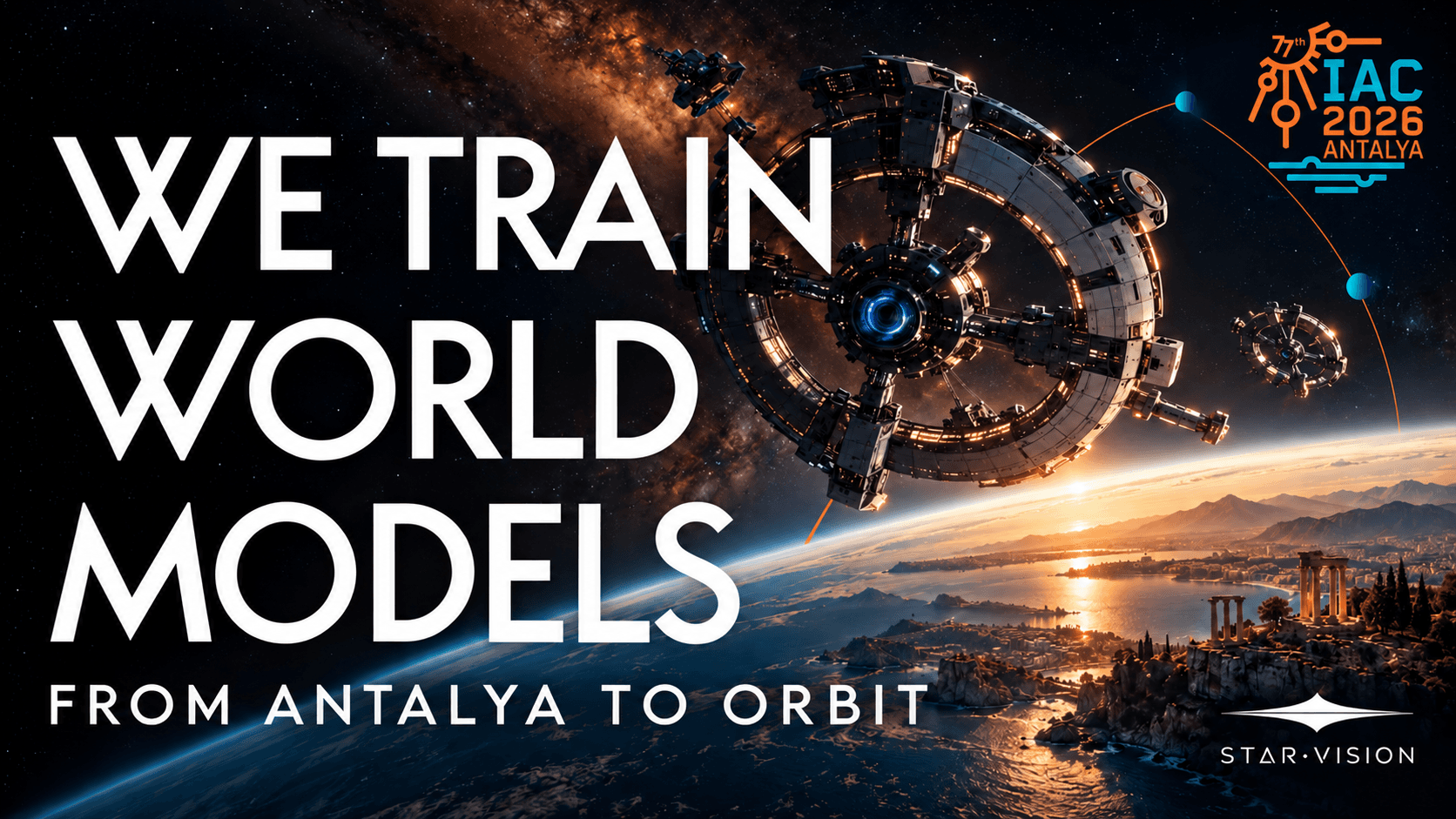
What happens when satellites can do more than observe—when they can process, reason and collaborate in orbit?
And what becomes possible when that capability opens up to researchers, developers and partners around the world?
These questions shaped STAR.VISION’s presence at the 77th International Astronautical Congress in Antalya, Türkiye, from 5–9 October 2026.
As a Gold Sponsor of IAC 2026, we brought together our work in Earth observation, orbital computing, intelligent applications and lunar robotics around one message:
WE TRAIN WORLD MODELS.
For STAR.VISION, this expresses a direction: connecting observations of the physical world with AI systems that can help interpret it, support decisions and, ultimately, interact with it.
Across five days of demonstrations, announcements and conversations, we shared the infrastructure we are building—and explored how more people could help shape what comes next.
01 | MORE THAN EARTH OBSERVATION
From Satellites to World Models
Our booth brought six themes into one connected journey:
From Earth. To the Moon.
From Perception. To Generation.
From Orbital Access. To Local Empowerment.
Together, they expressed how we see the relationship between space technology and artificial intelligence.
Earth observation provides the sensing layer: optical, SAR, hyperspectral and other satellite observations that reveal different aspects of our planet. Computing provides the capacity to process those observations. AI helps translate them into information that people can understand and use.
Connecting these capabilities is central to our World Models vision.
From sensing the world to understanding the world.
At IAC, visitors could explore this direction through our constellation plans, Space IDC concept, World Model 007 applications and lunar robotic demonstrations. Access to orbit and local partnerships completed the picture, connecting technical development with the practical question of how these capabilities reach users.
Our Open Space Ecosystem brings these efforts together. It connects satellite infrastructure with the agencies, companies, researchers and developers who can build applications around it.
The ambition is to make space intelligence increasingly useful and accessible—from understanding changes on Earth to exploring environments beyond it.
02 | AI IS MOVING INTO ORBIT
The Next Generation of Space Computing
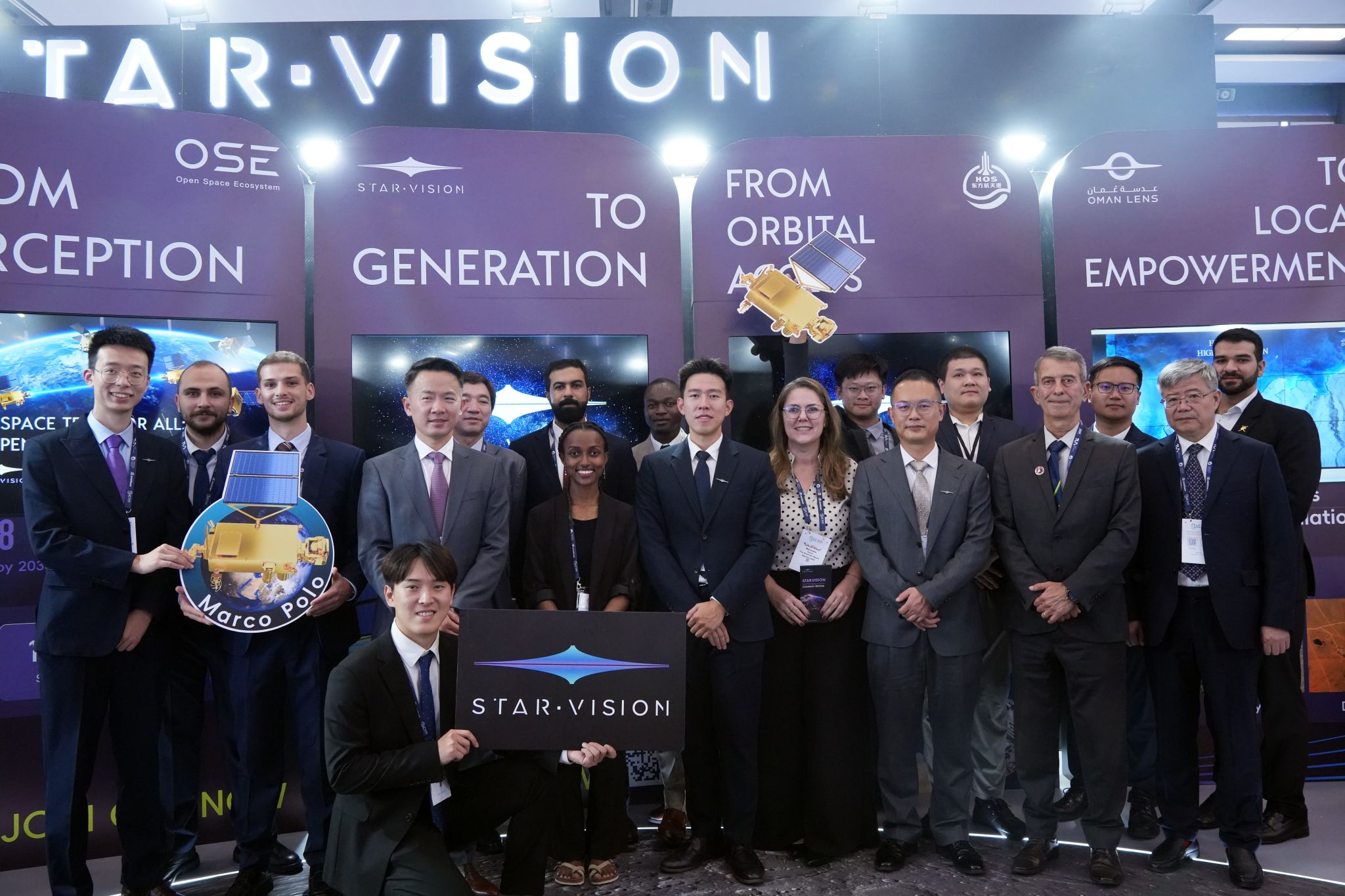 STAR.VISION unveiled a new high-compute satellite pair: Marco Polo and Ibn Battuta
At IAC 2026, STAR.VISION unveiled Marco Polo and Ibn Battuta, a new high-compute satellite pair targeted for launch in the fourth quarter of 2026.
Named after two pioneering explorers, the satellites are designed to take on complementary roles within a shared orbital computing architecture.
Marco Polo: inference and decision-making.
Marco Polo is designed to run the 397-billion-parameter Qwen3.5 model in orbit, combining STAR.VISION’s proprietary A1 inference payload with at least 4 TB of onboard storage.
The goal is to make the AI model itself a mission payload—bringing reasoning closer to the observations and tasks it serves.
Ibn Battuta: computing and data processing.
Built around a 10 POPS computing platform, Ibn Battuta is engineered to handle demanding AI workloads, process and fuse optical, SAR and multispectral data, and support lightweight model training in orbit.
The pair is designed to communicate through a 100+ Gbps optical inter-satellite link, enabling task sharing and distributed processing.
This division of work connects reasoning with computational execution: one satellite interprets and allocates tasks, while the other provides the capacity for intensive processing.
It is a step toward our Space IDC vision: deploying AI in space through infrastructure that can support increasingly capable, programmable space agents.
Processing data closer to its source could help satellites prioritize relevant observations, adapt workloads and deliver useful results with less dependence on sending every raw image to the ground.
The capabilities announced at IAC are design objectives for the planned missions. They also establish a clear development direction:
From satellites carrying instruments to satellites carrying intelligence.
03 | YOUR AI. IN SPACE. FOR EARTH.
AI4SDGs Goes Global
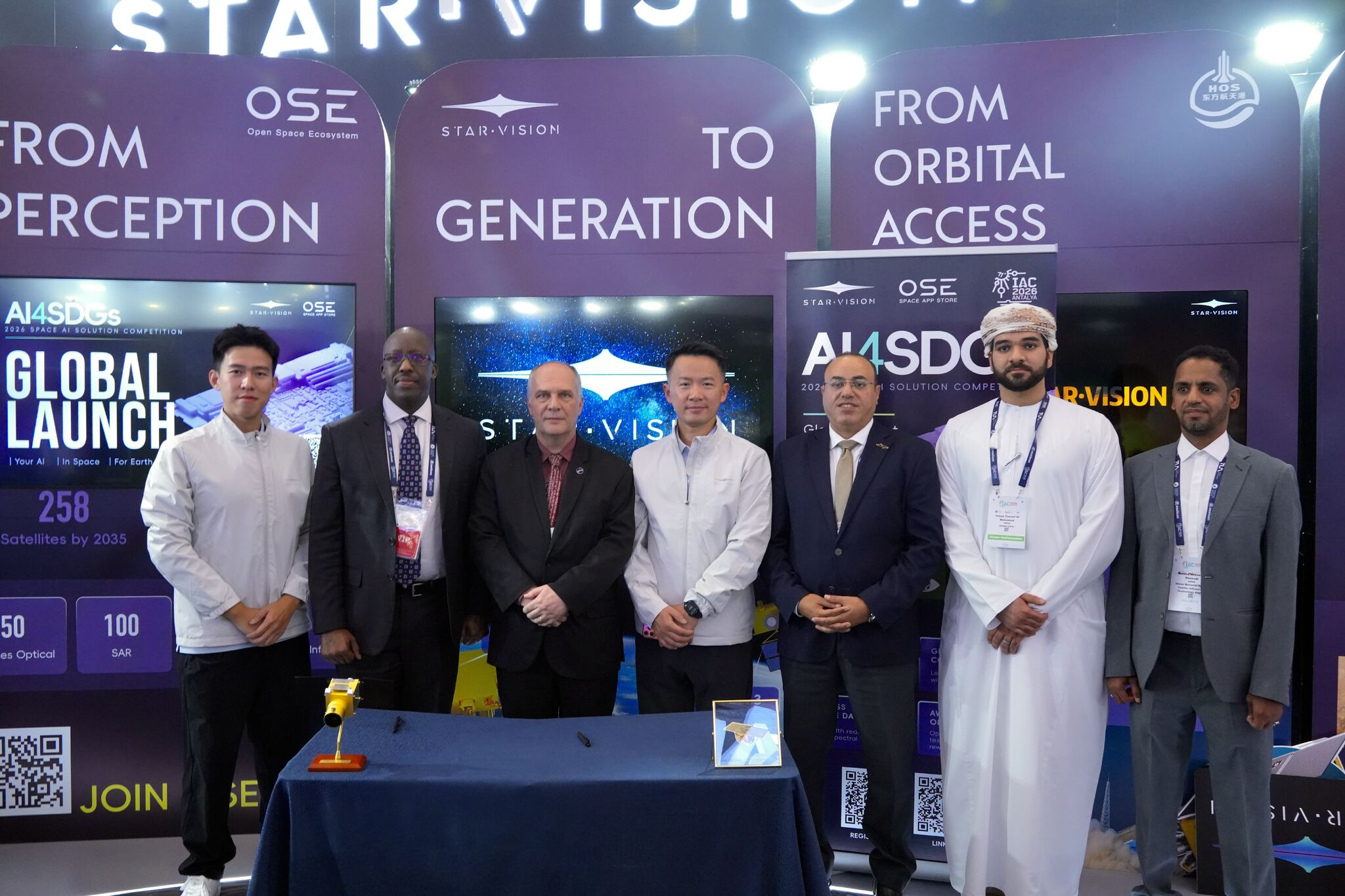 Celebrating the AI4SDGs launch with international partner delegations at IAC 2026
Building orbital AI infrastructure raises another question: who gets to build with it?
Through the STAR.VISION 2026 AI4SDGs Space AI Solution Competition, we are connecting students and researchers with satellite data, practical development challenges and opportunities to explore AI deployment in orbit.
At IAC 2026, we celebrated the competition’s launch and signed competition partnership agreements with:
• Brazilian Space Agency — Agência Espacial Brasileira (AEB)
• Kenya Space Agency (KSA)
• Egyptian Space Agency (EgSA)
• Oman Lens LLC
These partnerships help connect the competition with research communities and emerging talent across different regions.
The challenges focus on three areas: sustainable cities, climate resilience and sustainable agriculture. Through tasks such as building extraction, flood-related water segmentation and hyperspectral crop mapping, participants can work on concrete problems where satellite observations and AI have practical value.
The path from an algorithm to a useful space application requires more than computing power. It requires relevant data, an understanding of the problem and opportunities to test how a model performs. AI4SDGs brings those elements closer together.
It also gives students and researchers a way to participate in space technology without first having to build or own a satellite.
For STAR.VISION, this is an essential part of the ecosystem: creating room for new contributors alongside new infrastructure. A team working on flood mapping, crop analysis or urban development may bring the insight that turns a technical capability into a useful solution.
Your AI. In space. For Earth.
04 | BREW THE NEXT SPACE UNICORN
Building the Global Space Ecosystem Together
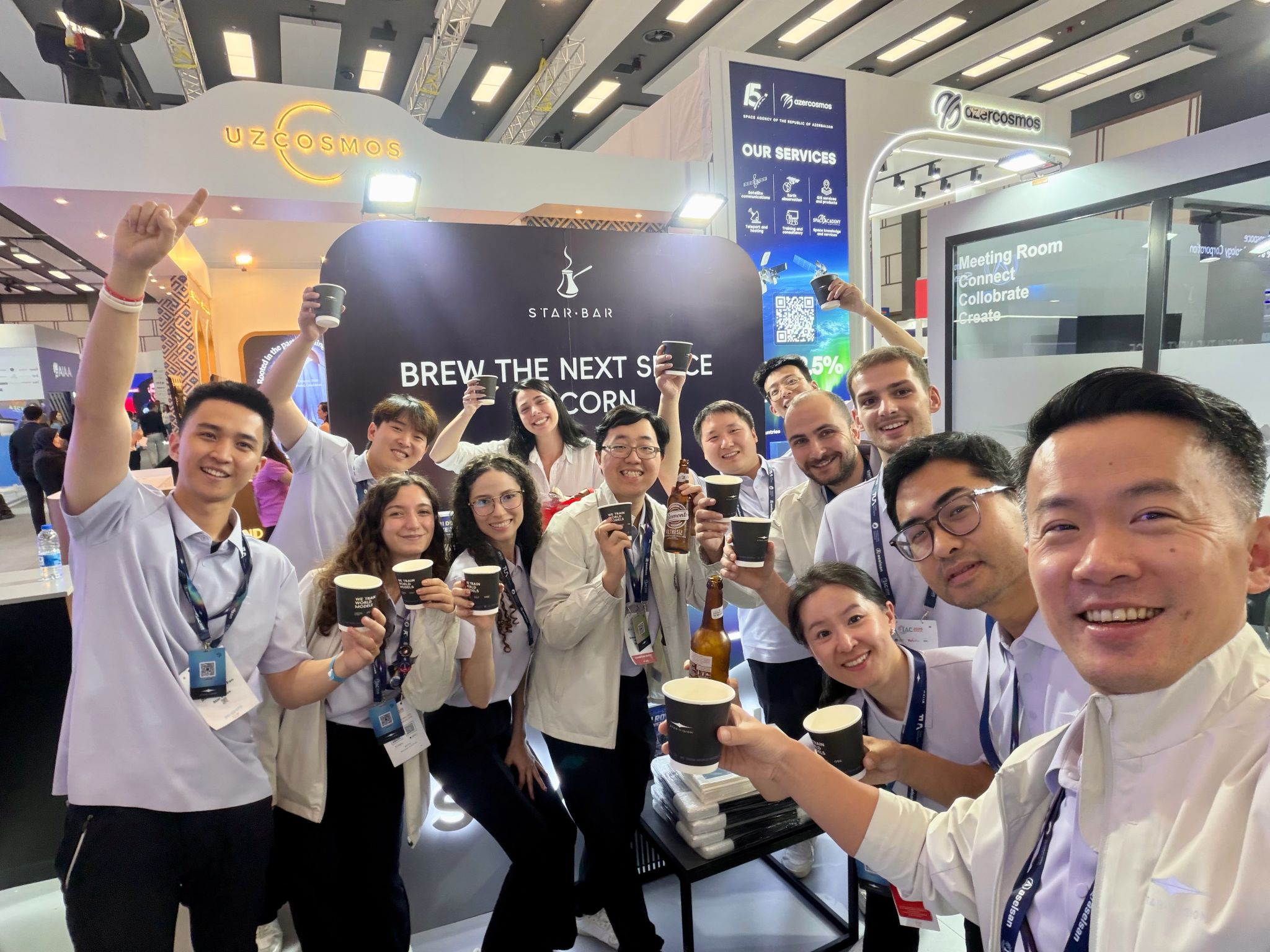 Sharing ideas and a cup of coffee at STAR BAR
Some of the most memorable conversations at IAC began at STAR BAR.
Between demonstrations and scheduled meetings, a cup of coffee offered space to pause, exchange ideas and discover shared interests.
BREW THE NEXT SPACE UNICORN.
The phrase captured an ambition behind our presence in Antalya: bringing together people whose different capabilities could become the foundation for something new.
Throughout the week, our booth welcomed space agencies, research institutions, commercial partners, entrepreneurs and young engineers. Conversations connected satellite technology with local priorities, research interests and opportunities for international cooperation.
Among these exchanges were discussions with UZCOSMOS and the Rwanda Space Agency, exploring opportunities to deepen cooperation, develop space applications and strengthen local capabilities.
Each relationship brings a different perspective. Partners understand their own communities, institutions and development needs. STAR.VISION contributes satellite, AI and application capabilities. The opportunity lies in finding where those strengths can support meaningful work together.
That is also the purpose of our Open Space Ecosystem: to help ideas, expertise and infrastructure find one another across borders.
Some partnerships began with a formal meeting. Others began over a cup of coffee at STAR BAR. Both create an opening to listen, understand a need and explore what could be built together.
05 | FROM EARTH TO THE MOON
Exploring Beyond Earth. Inspiring the Next Generation.
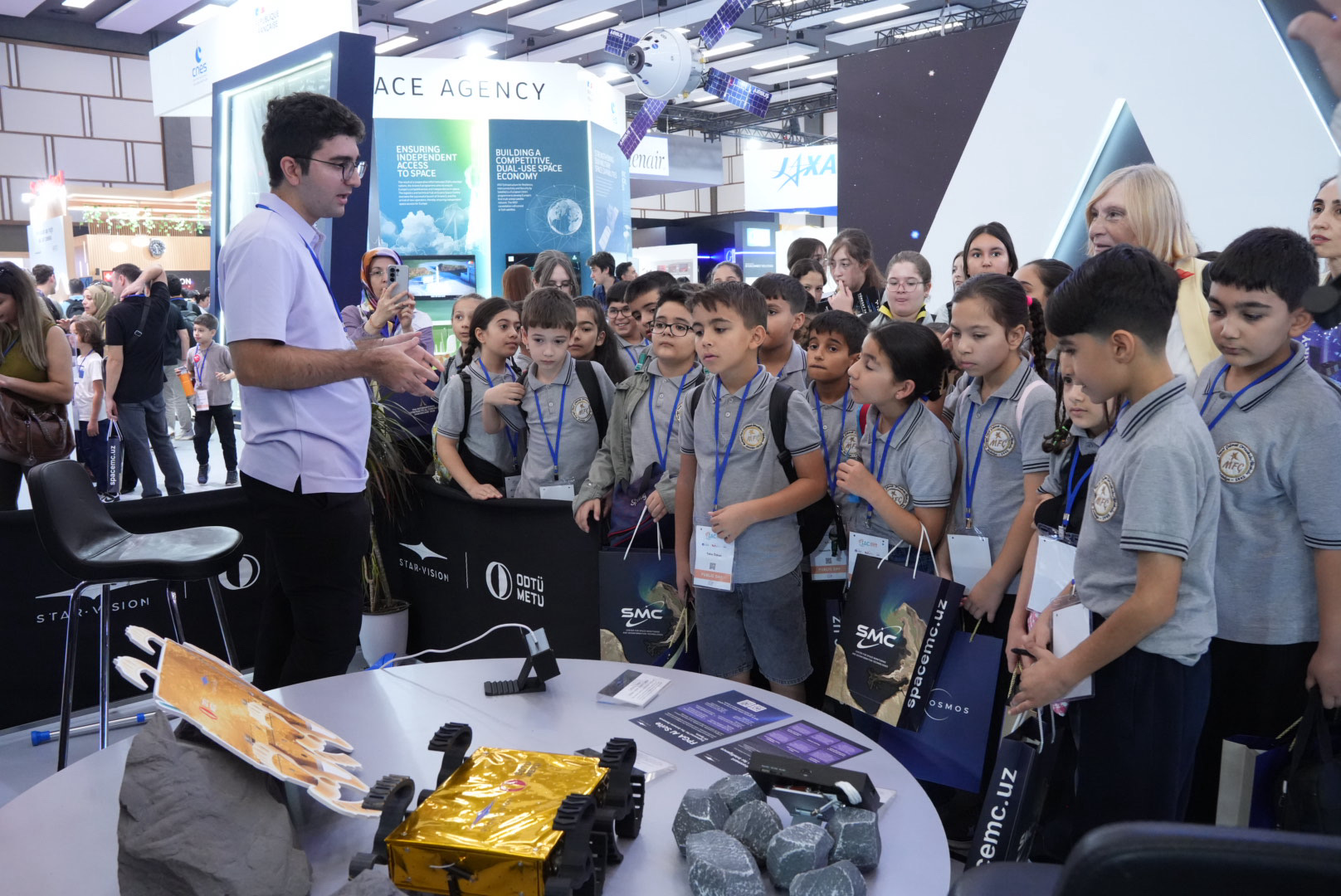 Young visitors explore lunar robotics with the STAR.VISION team
A lunar rover can make a distant ambition feel surprisingly close.
At our booth, the lunar robotic display gave young visitors a tangible way to encounter space exploration. They could see a robot move across a lunar-themed environment and begin to connect the idea of a future mission with a machine in front of them.
For STAR.VISION, that encounter connects two parts of the future we want to help build: intelligent systems that can explore beyond Earth, and a younger generation curious enough to develop them.
Our work in lunar robotics extends our interest in AI from observing environments to operating within them.
Future robotic exploration will depend on systems that can perceive unfamiliar terrain, navigate difficult conditions and make decisions with limited human intervention. These challenges connect naturally with the wider questions behind our World Models vision: how machines interpret their surroundings and use that understanding to act.
At IAC, the rover brought those questions into a form that visitors could engage with directly.
For a young person, that first encounter might begin with a simple question: How does it move? How does it know where to go? Could I build something like this?
Those questions are worth encouraging.
Developing the next generation of space technology also means helping the next generation of people imagine a place for themselves in it—as engineers, researchers, programmers and explorers.
Exploring beyond Earth. Inspiring the next generation.
06 | THE NEXT CHAPTER STARTS HERE
From Antalya to Orbit
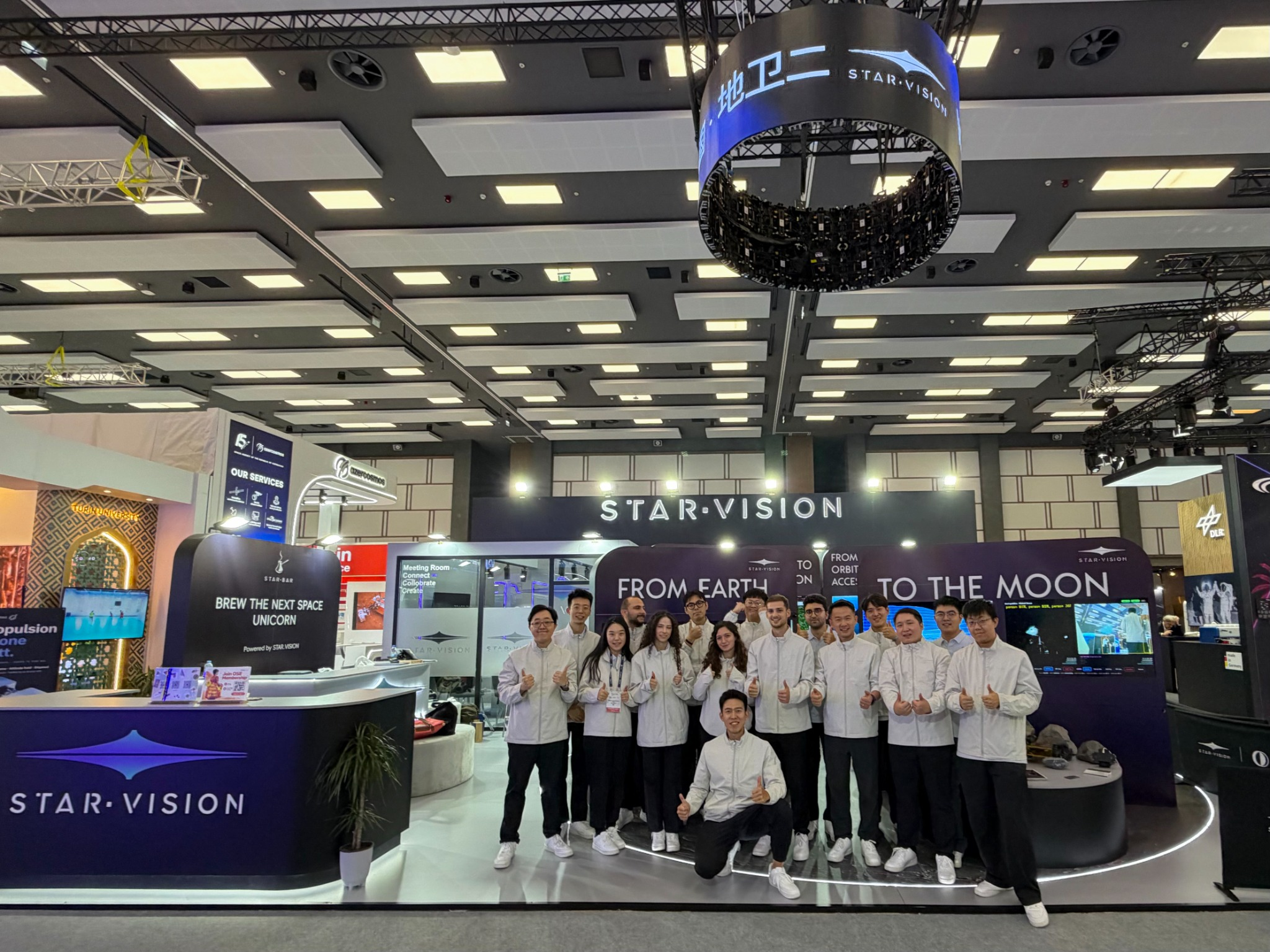 The STAR.VISION IAC 2026 team. From Antalya to orbit, the journey continues
IAC 2026 brought our team’s work into one place: satellite systems, orbital computing, AI applications, international partnerships and lunar robotics.
It also brought us into conversation with the people who will help determine how those capabilities develop.
We heard from agencies exploring local space capacity, researchers seeking new opportunities to apply AI, and partners looking for ways to connect technology with practical needs.
These exchanges give purpose to the work ahead.
The next chapter means advancing our planned computing missions, supporting the AI4SDGs community, developing partnerships and continuing to explore how intelligent robotic systems can operate beyond Earth.
Across those efforts, our direction remains clear:
More intelligence in orbit.
More people building with space.
More missions beyond Earth.
We came to Antalya to share what we are building. We left with new connections, sharper questions and opportunities to explore together.
Behind every demonstration and conversation was a team working across disciplines and borders. The same spirit will carry this work forward.
FROM ANTALYA TO ORBIT, THE JOURNEY CONTINUES.
WE TRAIN WORLD MODELS.
【About STAR.VISION】
STAR.VISION is a world-leading space intelligence infrastructure company and service provider dedicated to reshaping space infrastructure and global industry applications through AI. Through the vertical integration of intelligent spacecraft, on-orbit computing, spatiotemporal data, AI models, and space computing power, it drives the upgrade of traditional satellite systems into a space intelligence network with real-time computing, intelligent understanding, and collaborative service capabilities, serving governments, enterprises, and the emerging space economy worldwide.

Stay Informed
Subscribe STAR.VISION’s Newsletter

If you would like to receive email updates from STAR.VISION Newsroom, please complete the information above.