Climate Change Impact
on Caspian Sea
Satellite + AI

COP29
Showcase



Global Climate Change
Trends & Impacts
Fact
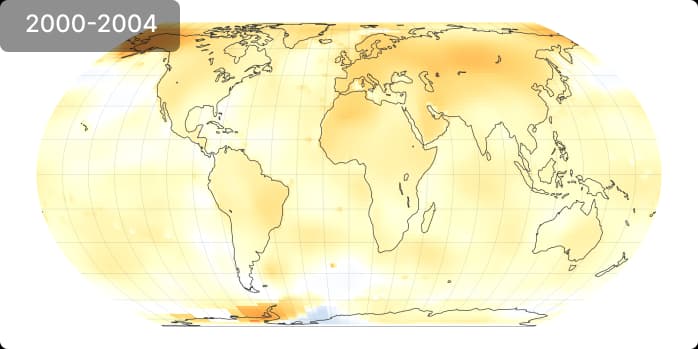
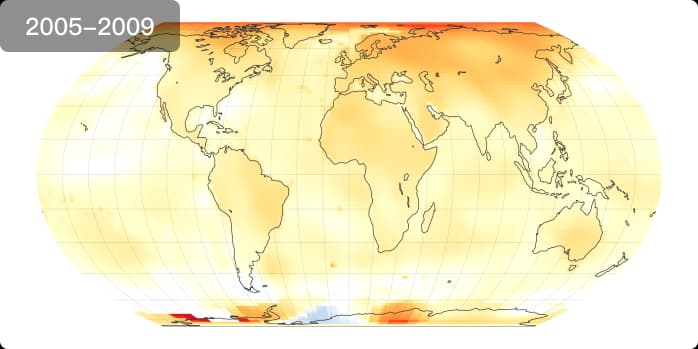
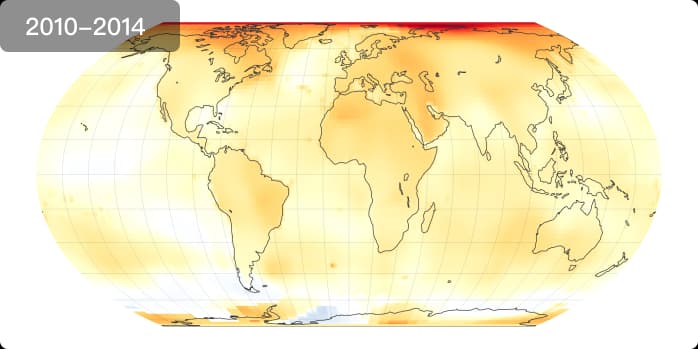
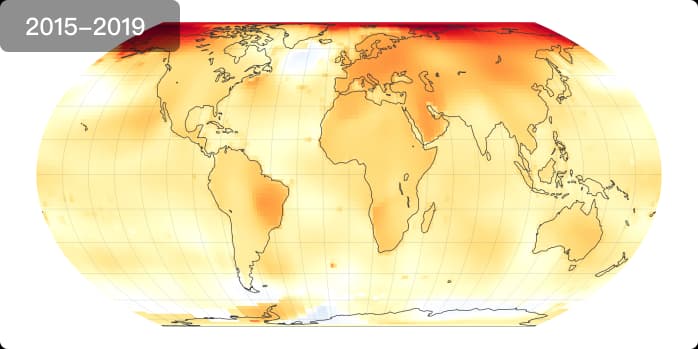
- The average global temperature has increased by at least 1.1°Csince 1880.
- Most of the warming has occurred since 1975, at a rate of roughly 0.15 to 0.20°Cper decade.
Image Source: NASA’s Goddard Institute for Space Studies (GISS).
Impact
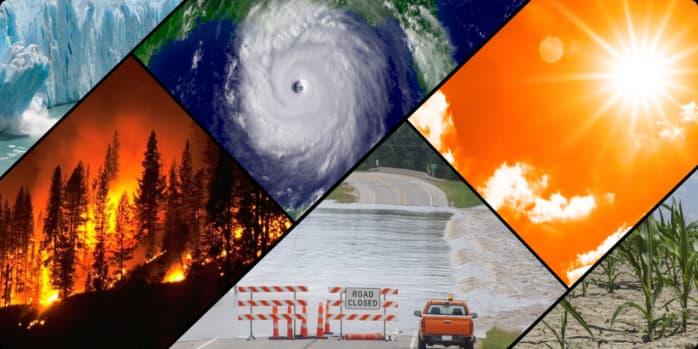
- Extreme Weather Events
- Disruption to Ecosystems
- Agriculture and Food Security
- More...
Decline in Lake Water Storage
Case in the Caspian Sea
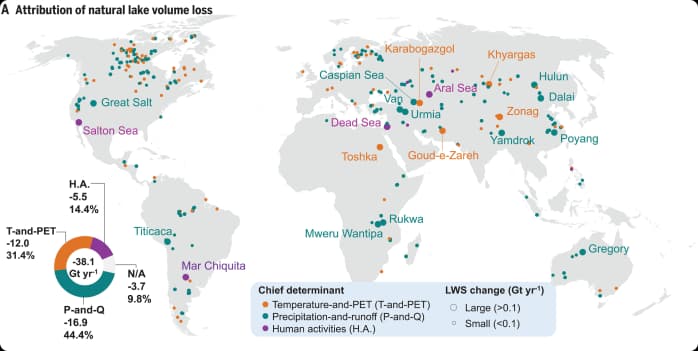
Widespread Decline in Global Lake Water Storage
- Natural lake volumes globally have beendecreasingat a rate of −26.38 ± 1.59 Gt/year.
- 56% of the decline is linked tohuman activities and climate-driven factorslike increased temperatures and evaporation.
Image Source: Fangfang Yao et al. ,Satellites reveal widespread decline in global lake water storage. Science380,743-749(2023).DOI:10.1126/science.abo2812
The Caspian Sea’s Shrinking Coastline
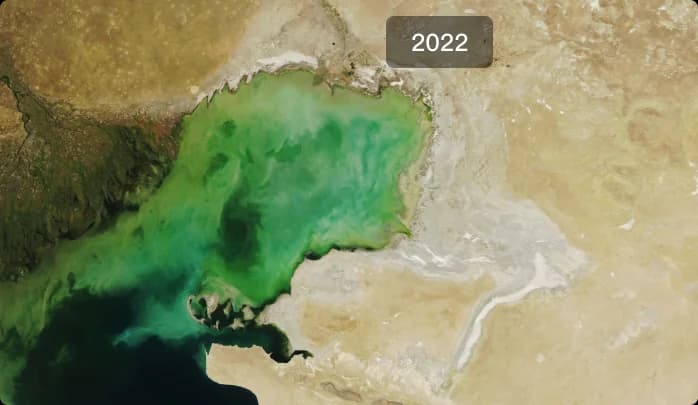
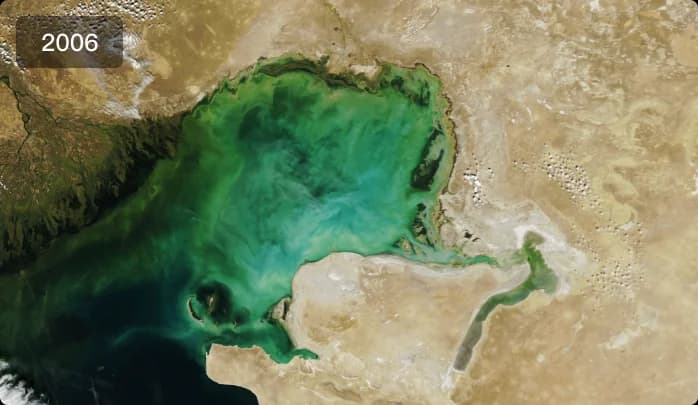
- The Caspian’s water levels have been dropping since the mid-1990s.
- The decline could continue as climate change bringswarmer air temperatures and increased evaporation.
Image Source: NASA Earth Observatory images by Lauren Dauphin, using MODIS data from NASA EOSDIS LANCE and GIBS/Worldview.
- At COP29 , global leaders gather to confront the pressing challenges of climate adaptation.
- Azerbaijan, hosting this key event, brings to light the critical issues facing the Caspian Sea region.
Azerbaijan’s Coastal Vulnerability
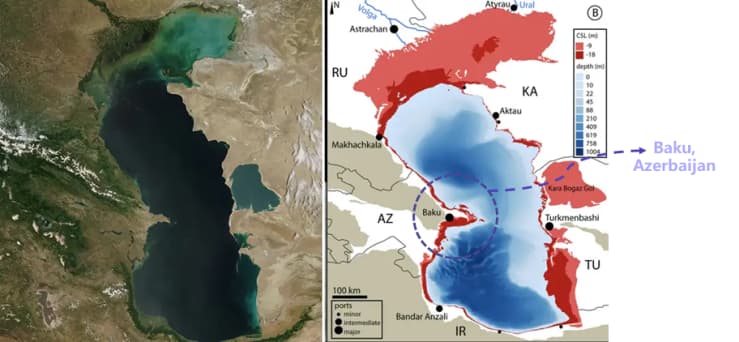
- Azerbaijan's coastline along the Caspian Sea is increasingly vulnerable.
- Impact on the Caspian Sea for a projected decline of 8–14 m by the end of the 21st century.
Source: Samant, R., Prange, M. Climate-driven 21st century Caspian Sea level decline estimated from CMIP6 projections. Commun Earth Environ 4, 357 (2023).
STAR.VISION & Azercosmos Cooperation:
Monitoring Caspian Sea


Target
To assess the impacts of climate change on Caspian Sea Region.

Method
Satellite on-board AI analysis.

Research focus
Coastline changes & water monitoring.

- STAR.VISION’s innovative approach combines satellite imagery with on-board AI.
- Provide real-time analysis on coastal and water quality changes.
- Future on-board AI validation will enhance the precision of monitoring efforts.

Methodology for Coastline Analysis
Data
Caspian Sea
Satellite imagery for 1994, 2004, 2014, 2024
Azerbaijan Coast
Satellite imagery for 2004, 2009, 2014, 2019, 2024
Method
Coastline Extraction with DeepLabV3+
Representative Site Analysis
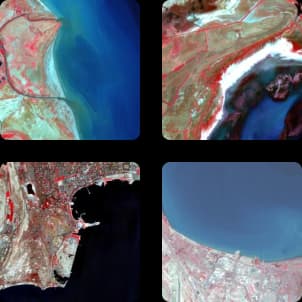


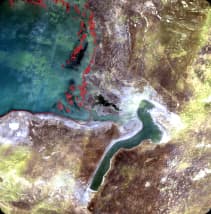
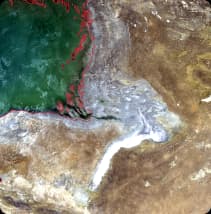
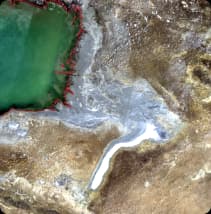
Coastline Analysis of Caspian Sea
Discovery
Significantcoastline retreathas been detected, progressing further inland.
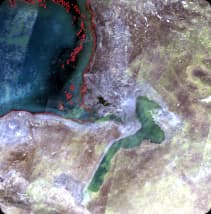
Case Study
Mangystau Region, Kazakhstan
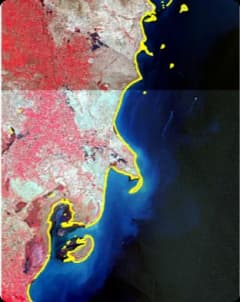
Coastline Analysis of Azerbaijan Coastal Area
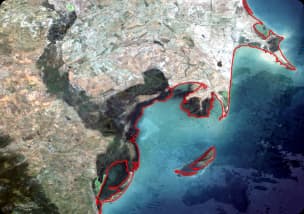
Discovery
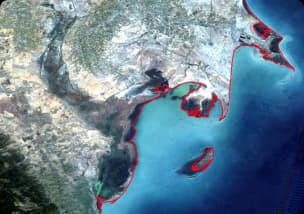
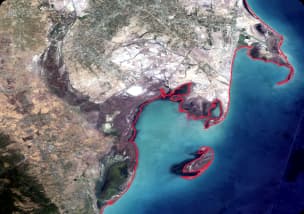
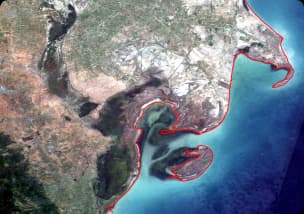
Coastline recessionalong Azerbaijan reflects adverse effects on biodiversity and vulnerable coastal ecosystems.
Case Study
Gizil-Agach State Reserve, Azerbaijan
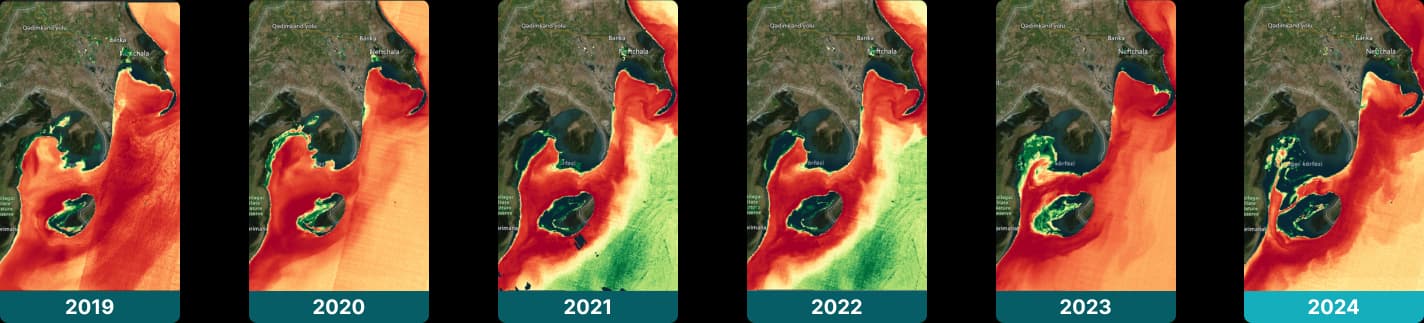
Methodology for Water Quality Monitoring
Data
Caspian Sea
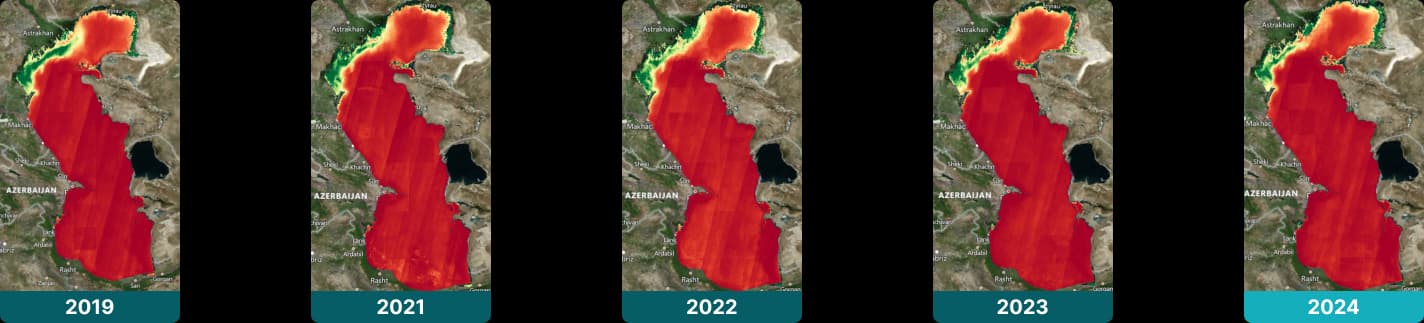
Satellite imagery for 2019 - 2024
Azerbaijan Coast
Satellite imagery for 2019 - 2024
Method
Chlorophyll-a (Chla)
Water Transparency (SDD)
Total Suspended Solids (TSS)
Trophic State Index (TSI)
Water Quality Monitoring Caspian Sea
Water Quality Monitoring Azerbaijan Coastal Area
Ground Test and On-Board AI Trials
Ground Test Verification
- STAR.VISION’s AI payload has undergone rigorous ground testing and has been successfully verified with the coastline extraction algorithms.

Upcoming On-Board AI Test
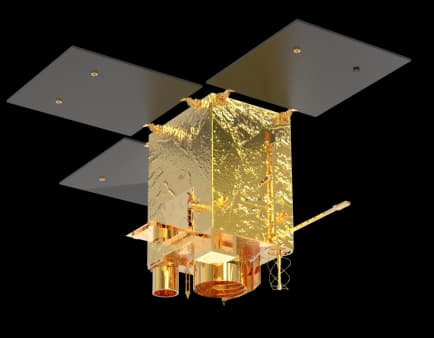
- Test the AI model directly from satellite on-board.
- This will enable real-time data processing in space.
Interested in learning more?
STAR.VISION delivers an unprecedented Earth observation capability powered by advanced AI and satellite technology. We transform vast data into a precise basis for decision-making, helping you confidently meet the most critical challenges.
*Professor Sun Weiwei's team from Ningbo University also contributed to this case study