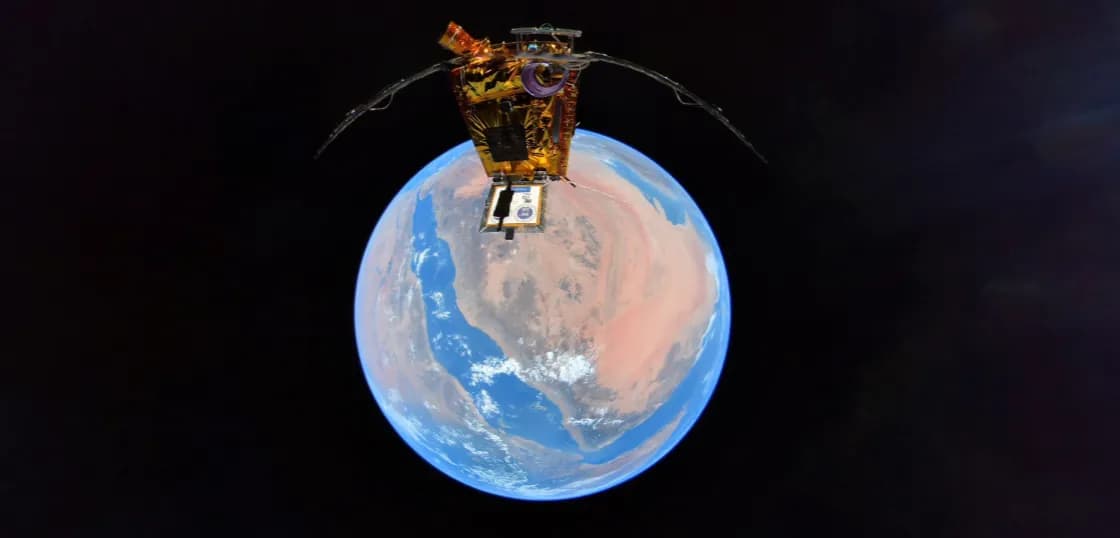
What is Space Computing
 star vision
Space computing involves the integrated utilization of computational resources deployed in space, forming a space cloud computing network interconnected in space to fulfill a set of computational theories, methods, technologies, and applications required for various complex space missions such as Earth observation, planetary exploration, and space governance.
Space computing aims to optimize and extend data processing capabilities in space missions, primarily categorized into two main forms based on practical computational models:
Space Edge Computing
Space Cloud Computing
Through the combination of space edge computing and space cloud computing, space computing can provide a multi-level, highly flexible, and scalable computing environment. It optimizes space mission processing workflows at different levels to enhance computational efficiency, reduce dependency on Earth, strengthen mission autonomy and reliability, and provide robust support for space exploration and utilization.
▎What is Space Edge Computing?
Space edge computing focuses on the origin of space data generation, aiming to reduce communication demands, enhance data processing speed, increase mission autonomy, optimize energy usage, thereby alleviating the data load transmitted to Earth, improving decision-making and response rates, suitable for tasks requiring high real-time demands. The goal of space edge computing is to create a highly autonomous, reliable edge computing environment that operates efficiently in extreme space conditions.
▎What is Space Cloud Computing?
Based on space edge computing, space cloud computing establishes cloud computing infrastructure in space through high-speed interconnectivity and distributed computing frameworks. It aims to provide elastic computing resources and services in space, enabling more flexible sharing and distribution of data and computational tasks across space platforms. By unified virtualization management of space computing resources, space cloud computing supports more complex data analysis and storage tasks, enhances overall resource utilization, and provides large-scale computing services for space missions.
▎What is Space Cloud Computing?
Space computing is not simply about carrying computing payloads like ordinary satellites; rather, it represents a methodological shift and forms a new technological system based on this shift.
The main enhancements are in three aspects:
Spaceborne computing and distributed computing capabilities
Space interconnectivity capabilities
Space intelligent computing capabilities
▎Why connect?
Connectivity is a critical enabler for cloud computing and forms the foundation of space distributed computing.
It utilizes multiple dispersed computing nodes (such as satellites, space stations, or(and?) other space platforms) to perform data processing, storage, and analysis tasks. These computing nodes are interconnected via networks to form a collaborative computing network. The core of space distributed computing lies in distributing computing tasks across different space assets to enhance overall computing efficiency, reduce reliance on ground stations, and strengthen the autonomy and reliability of space missions.